Report

Just open Benchling and ask. Access one main AI interface that lives in your notebook, keeps full scientific context, and requires no switching between agents and tools mid-workflow.





The AI Scientist wires together the digital and physical worlds of R&D. In this essay, Benchling CEO Sajith Wickramasekara defines the AI Scientist, examines what makes it challenging to build, and shares an architecture for how it works.
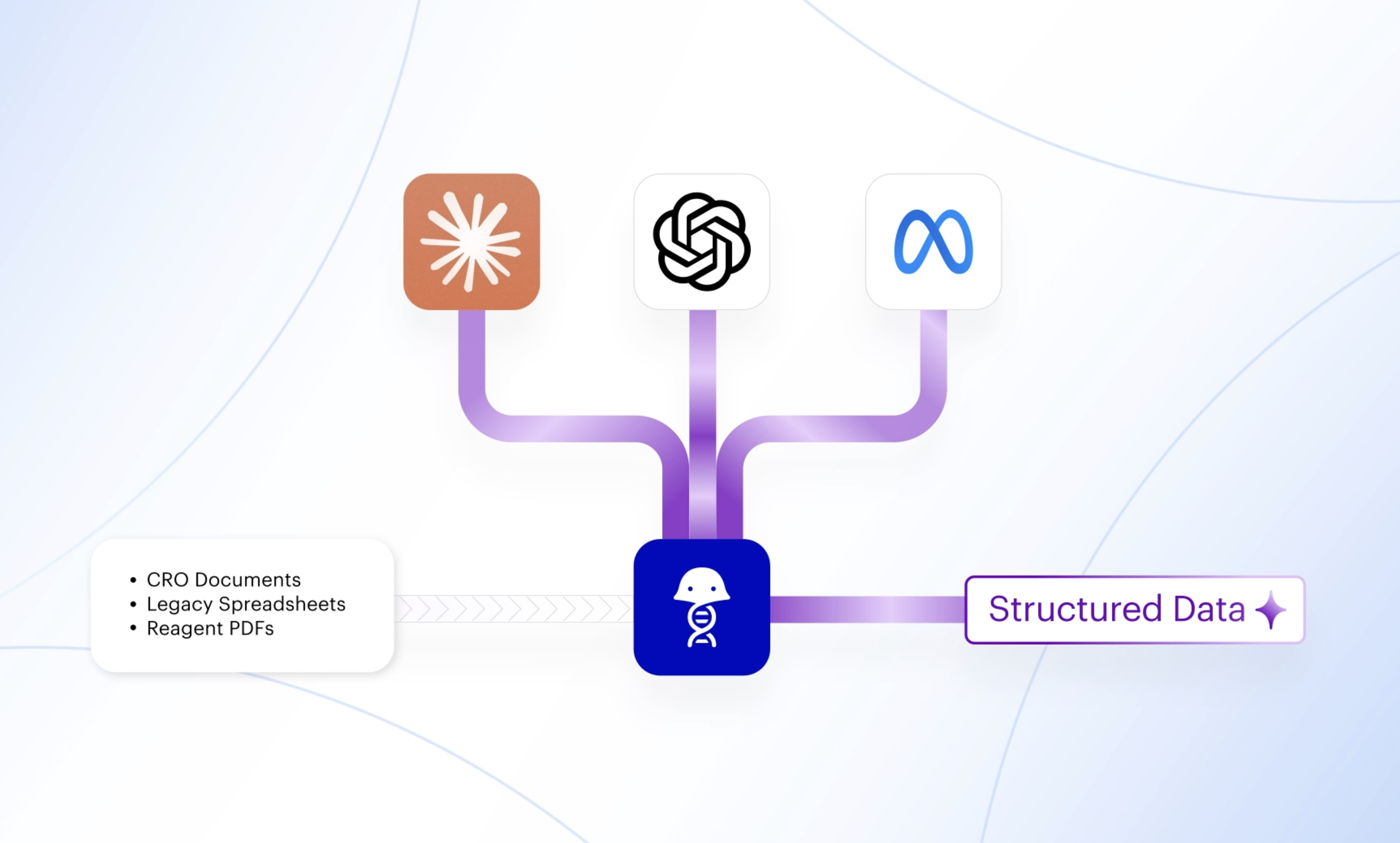
No data wrangling or engineering pipelines. With Benchling, you’ve got clean, structured data with scientific context that’s AI-ready from day one.
Ask a question, import a file, write a report, run a model, and much more. Whatever the task, we’ll handle it for you, with full context carried through from start to finish.
Access leading models from NVIDIA, Anthropic, Google, and OpenAI — no vendor lock-in, no integration work.
Benchling AI is built directly into the notebook scientists already love and use every day. Describe what you need — find an experiment, analyze a dataset, draft a report, import a CRO file — and Benchling AI handles it. It reads your experimental context, works across your structured and unstructured data, and delivers cited, traceable results, without separate tools or setup.
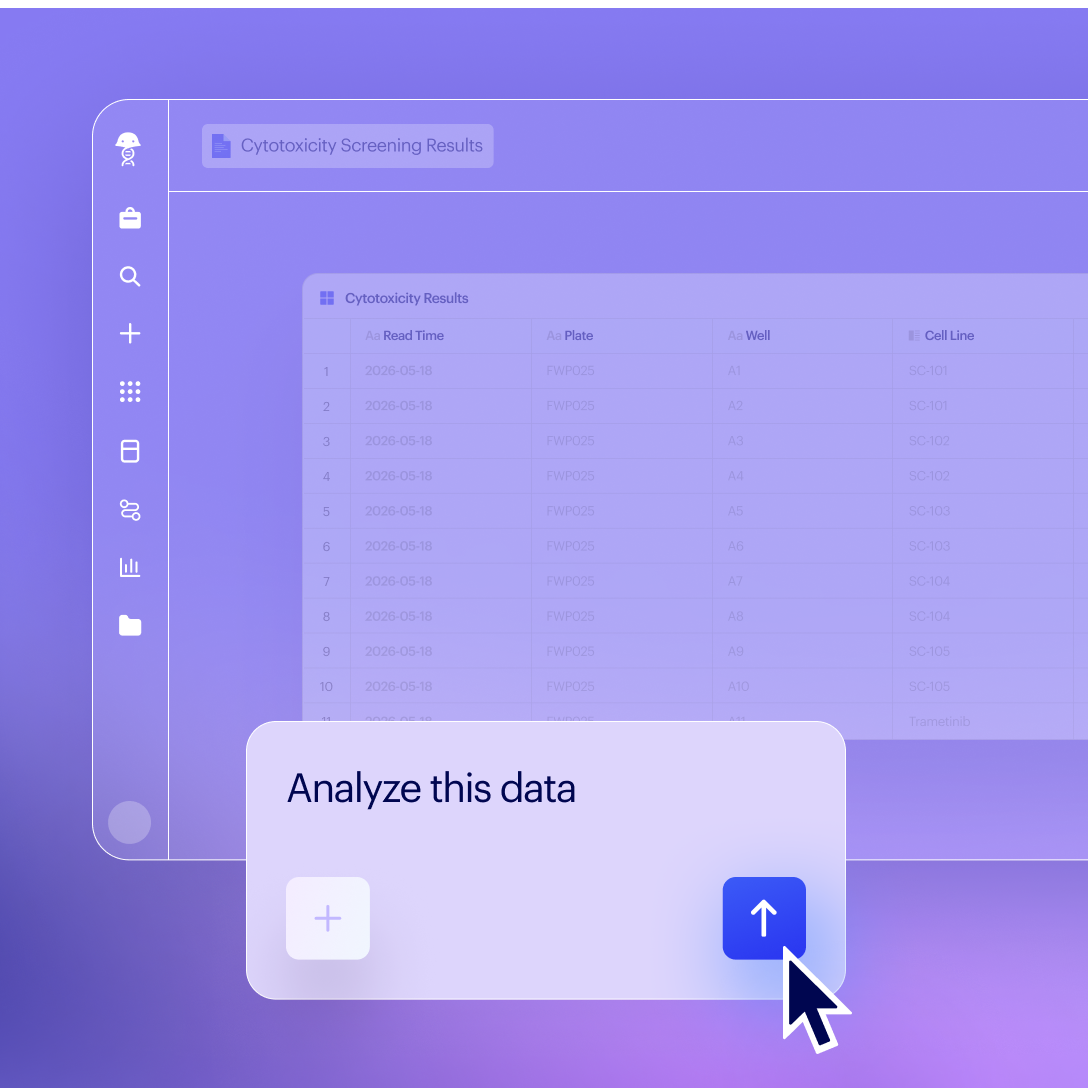
Use advanced scientific models directly in your workflows without the need for extensive computational expertise.
Run domain-specific models like AlphaFold 2, Chai-1, and Boltz-2 without leaving Benchling
Feed model predictions into experimental design, closing the loop from in silico to in vitro in days, not months
Access new models automatically as they deploy, keeping you current without extra integration work
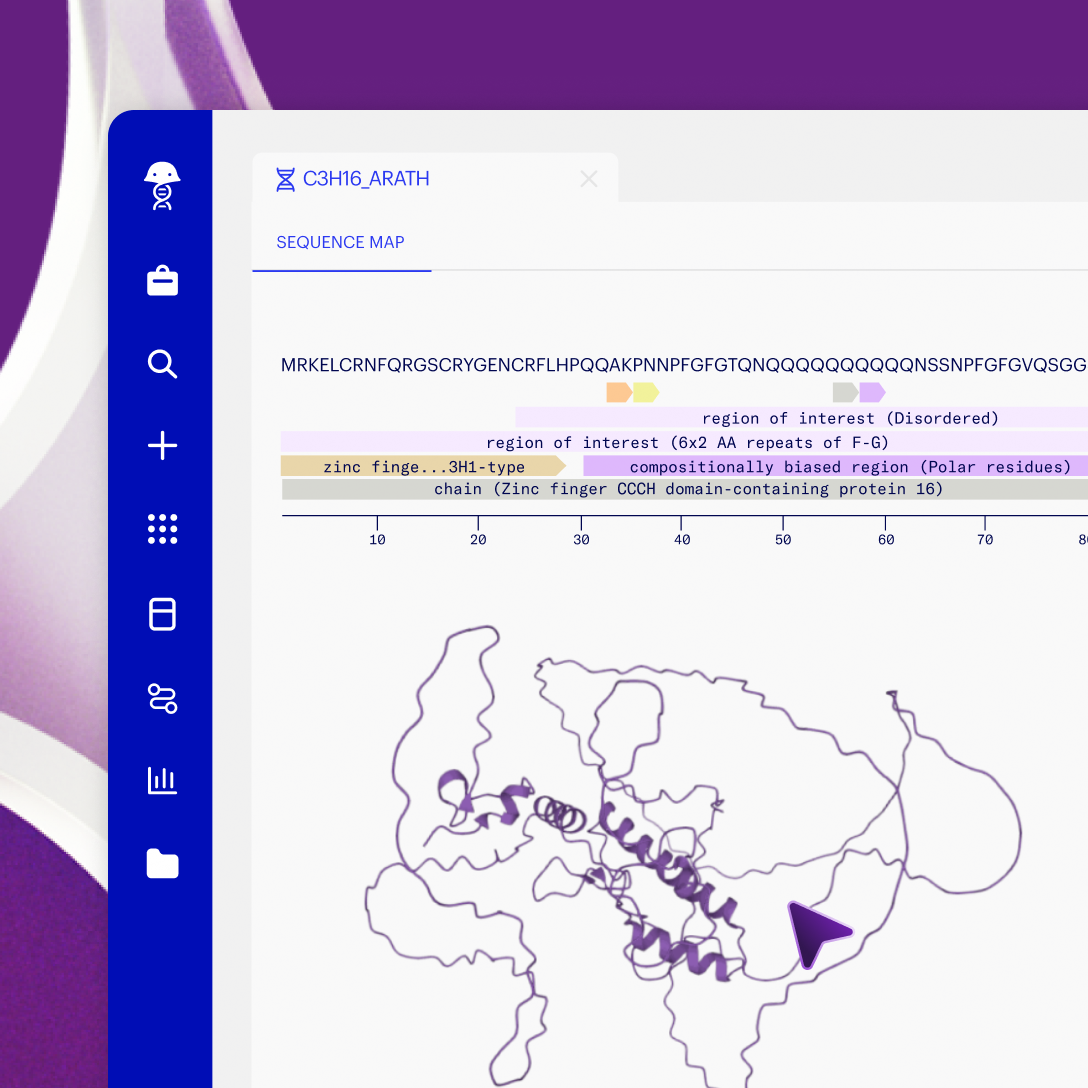
Benchling AI connects your entire R&D stack using open standards, providing insights and flexibility insights without vendor lock-in.
Bring data in and out of Benchling freely, and switch model providers as the landscape evolves
Connect to other AI and data systems through Model Context Protocol (MCP) — no custom APIs required
Access frontier models from NVIDIA BioNeMo, Anthropic Claude, Lilly TuneLab, Google Gemini, and OpenAI directly in Benchling
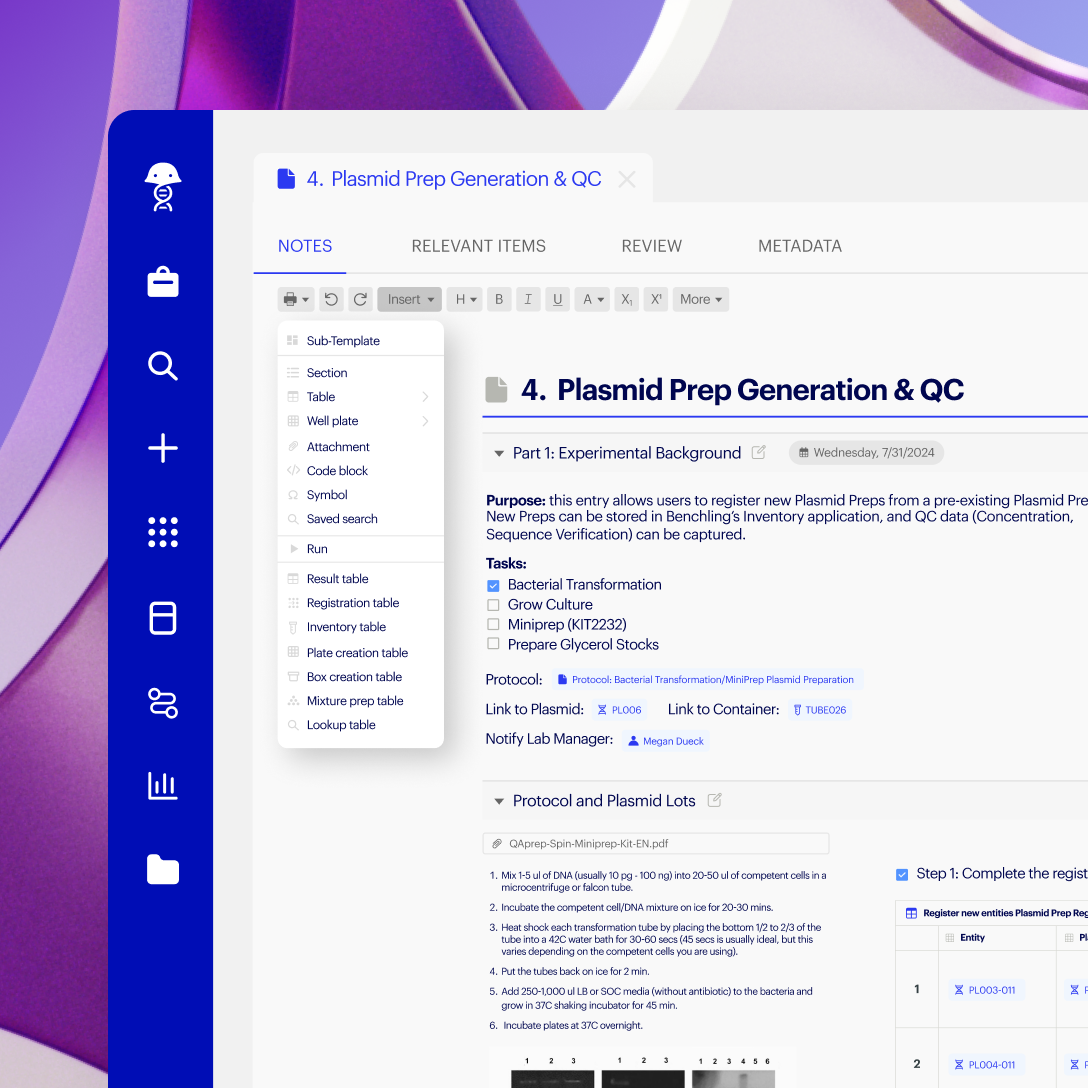
AI is creating extraordinary opportunities in science, but realizing its full potential requires entirely new ways of working. Benchling is tackling these industry-wide challenges head-on.
Senior Vice President, Digital at Moderna
Benchling AI is a unified interface built directly into the Benchling notebook. Scientists describe what they need — find experiments, import data, analyze results, write reports, run structure prediction models — and Benchling AI handles it, grounded in their own structured R&D data. It's available to all Benchling customers, with free access for academic scientists.
You can search and answer complex questions across your entire Benchling data, import unstructured files like PDFs and CRO reports as structured data, draft and document notebook entries and study reports, and run structure prediction models including AlphaFold 2, Chai-1, and Boltz-2 — all from one conversation in your notebook. SQL Writer and Notebook Check are also included with your subscription for query building and entry review.
Benchling AI gives scientists direct access to leading structure prediction and generative models including AlphaFold 2, Chai-1, and Boltz-2, without leaving the platform. Model predictions are connected directly to your experimental data in Benchling, unifying in silico design and in vitro work. Benchling is also integrating NVIDIA NIM microservices including NVIDIA BioNeMo models, and supports models from Anthropic Claude, Google Gemini, OpenAI, and Lilly TuneLab.
Experiment Optimization uses classical machine learning and Bayesian optimization to analyze past experimental results and recommend the next best conditions to test. It helps scientists visualize multi-dimensional experimental spaces, compare conditions, and accelerate decision-making, without needing a dedicated data science team. It's particularly valuable in Bioprocess for process development cycles, and in Bioresearch for assay development.
Benchling is built on the principle that your data stays yours. Benchling does not train its own models on customer data. All AI actions are logged in product audit trails, and AI capabilities are developed under the same secure software development lifecycle as all Benchling features, including SOC 2 Type 2 and ISO 27001 compliance. Full details are available in the AI data protection and security policy and the Benchling Trust Center.
Yes. Benchling AI is designed with open standards in mind. It supports Model Context Protocol (MCP) for connecting to external systems like Microsoft Teams, SharePoint, Slack, and other platforms without custom APIs. It also supports frontier models from NVIDIA BioNeMo, Anthropic Claude, Google Gemini, OpenAI, and Lilly TuneLab directly within Benchling, with no vendor lock-in.
Some Benchling AI features, including Notebook Check and SQL Writer, are included with your Benchling subscription at no additional cost. Agents and models use a credit system, and credits are included with every Benchling subscription so teams can start using AI right away. See the Getting started with Benchling AI help article for current credit information and how to enable AI features from the admin console.
Yes. Benchling has launched benchling.ai as a public entry point to explore Benchling AI, with example queries and interactive previews. Academic scientists also get free access as part of Benchling's academic plan.
The most common reason AI pilots stall in biotech isn't performance — it's data quality. When experimental data lives in spreadsheets, disconnected ELNs, or inconsistent formats, AI can't reliably reason over it. According to Benchling's 2026 Biotech AI Report, the AI use cases with the highest adoption succeed precisely because the underlying data is clean, structured, and verifiable. Benchling AI is built on this principle: agents and models connect directly to structured R&D data in Benchling, so the data problem is solved before the AI problem begins.
AI is only as good as the data it runs on. For biotech teams, that means working on a platform where experimental data is linked to registered samples, annotated with biological context, and captured consistently across teams. Benchling is designed around this from the ground up — every notebook entry, registered entity, and instrument result is connected in a single data model that AI agents can query in real time. See our AI Data Maturity guide for how leading biotech teams are building AI-ready data infrastructure.

Your data stays yours, always.
Benchling AI is built on the same trust principles that protect your R&D data today, so your data always remains secure.